



News
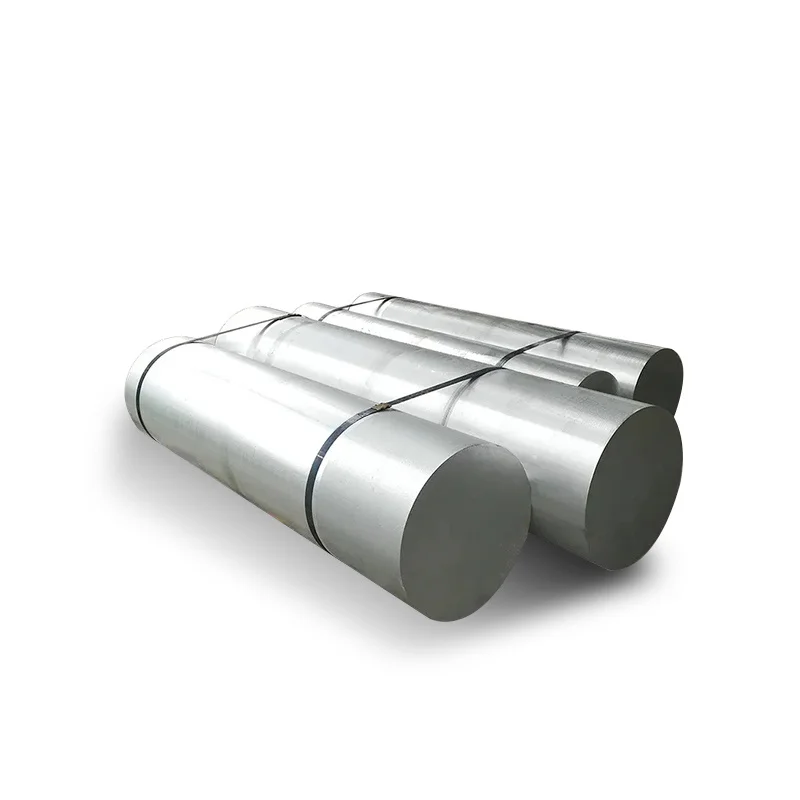
In industrial manufacturing, material selection directly affects corrosion resistance, fabrication efficiency, structural reliability, and long-term maintenance cost. Among non-heat-treatable aluminum alloys, the 5052 aluminum bar has become one of the most widely used materials for applications requiring a balance of strength, corrosion resistance, weldability, and lightweight performance.
From marine structures and pressure vessels to transportation equipment and chemical processing systems, 5052 aluminum bar is commonly selected for environments where standard aluminum alloys cannot provide sufficient durability under moisture, salt exposure, or chemically aggressive conditions.
However, many buyers still evaluate aluminum materials primarily based on price rather than lifecycle performance. This often results in premature corrosion, fabrication difficulties, increased maintenance frequency, or reduced structural stability.

This article explains the technical characteristics, processing advantages, and industrial applications of 5052 aluminum bar from an engineering and operational perspective.
5052 belongs to the Al-Mg (aluminum-magnesium) alloy series, with magnesium serving as the primary alloying element.
Compared with pure aluminum, the addition of magnesium significantly improves:
Mechanical strength
Corrosion resistance
Fatigue resistance
Weldability
Unlike heat-treatable alloys such as 6061 or 7075, 5052 aluminum bar gains strength mainly through cold working rather than precipitation hardening.
This gives the material several operational advantages in industrial fabrication environments.
Typical chemical composition includes:
Magnesium: 2.2–2.8%
Chromium: 0.15–0.35%
Aluminum: balance
Small amounts of silicon, iron, copper, manganese, and zinc
The magnesium content is the key factor behind the alloy’s excellent resistance to marine and chemical corrosion.
One reason 5052 aluminum bar remains highly popular is its balanced mechanical performance.
Typical mechanical characteristics include:
Tensile strength: approximately 210–260 MPa
Yield strength: approximately 130–215 MPa
Elongation: commonly 12–20%
Density: around 2.68 g/cm³
Compared with higher-strength aerospace alloys, 5052 offers lower ultimate strength but significantly better corrosion resistance and fabrication flexibility.
This makes it particularly suitable for structural applications where environmental durability is more important than maximum load-bearing capacity.
One of the biggest advantages of 5052 aluminum bar is its outstanding corrosion resistance.
The alloy performs especially well in:
Saltwater environments
Humid industrial facilities
Chemical processing plants
Marine structures
Outdoor equipment
Wastewater systems
Compared with standard carbon steel, aluminum naturally forms a protective oxide layer that helps resist oxidation.
The magnesium content in 5052 further improves resistance to:
Chloride exposure
Salt spray corrosion
Industrial moisture
Mild alkaline environments
This is why 5052 aluminum bar is widely used in shipbuilding, offshore structures, fuel tanks, and coastal infrastructure.
Marine environments are among the most demanding operating conditions for metallic materials.
Constant exposure to:
Saltwater
Humidity
UV radiation
Cyclic loading
Temperature fluctuations
creates severe corrosion risks.
5052 aluminum bar is frequently used for:
Boat structural components
Deck hardware
Marine brackets
Fuel systems
Ship interior structures
Coastal engineering equipment
Compared with ordinary steel, 5052 significantly reduces corrosion-related maintenance requirements.
Compared with stainless steel, it also offers lower weight, which improves fuel efficiency and simplifies fabrication.
Industrial manufacturers increasingly prefer materials that simplify production processes.
5052 aluminum bar offers strong fabrication performance in several key areas.
5052 is known for its strong welding compatibility.
It performs well with:
TIG welding
MIG welding
Arc welding
After welding, the material maintains good structural stability and corrosion resistance.
This is particularly important in:
Marine fabrication
Chemical storage equipment
Structural support systems
Transportation manufacturing
Some high-strength aluminum alloys lose significant mechanical properties after welding, but 5052 maintains relatively stable post-weld performance.
5052 aluminum bar also provides strong bending and forming capability.
The material can be processed into:
Structural brackets
Custom frames
Tanks
Machine components
Architectural elements
without excessive cracking risk during forming operations.
This improves manufacturing flexibility while reducing scrap rates.
Compared with free-machining alloys, 5052 is moderately machinable.
It can be processed using:
CNC turning
Milling
Drilling
Saw cutting
However, because of its relatively soft structure, proper tooling and lubrication are important to prevent built-up edge formation during machining.
Many industrial buyers compare 5052 and 6061 during material selection.
Although both are widely used aluminum alloys, they serve different engineering priorities.
5052 aluminum bar generally offers:
Better corrosion resistance
Superior marine durability
Better formability
Improved welding performance
6061 aluminum bar generally offers:
Higher structural strength
Better rigidity
Improved machinability
Heat-treatable strengthening capability
As a result:
5052 is often preferred for marine, chemical, and sheet fabrication applications
6061 is more common in structural frames, machinery parts, and aerospace support components
The correct selection depends on actual operating conditions rather than simply choosing the stronger alloy.
5052 aluminum bar also performs well in thermal and electrical conductivity applications.
The material offers:
Good thermal conductivity
Stable dimensional performance
Reliable heat transfer capability
This allows its use in:
Heat exchanger components
Cooling systems
HVAC structures
Electronic enclosures
Its relatively low density also helps reduce total equipment weight in transportation and industrial systems.
Another advantage of 5052 aluminum bar is compatibility with multiple surface finishing methods.
Common treatments include:
Anodizing
Brushing
Polishing
Powder coating
Chemical conversion coating
Anodized 5052 surfaces provide improved wear resistance and decorative appearance while maintaining corrosion protection.
This makes the material suitable for both industrial and architectural applications.
Because of its balanced performance, 5052 aluminum bar is used across multiple industries.
Common applications include:
Chemical processing equipment
Marine structures
Pressure vessels
Fuel tanks
Food processing equipment
Transportation systems
Architectural structures
Electronic housings
Environmental protection equipment
Its combination of corrosion resistance and lightweight performance makes it especially attractive for industries focused on durability and energy efficiency.
For industrial projects, material consistency is critical.
Poor-quality aluminum bars may suffer from:
Internal porosity
Surface cracking
Dimensional deviation
Unstable mechanical properties
Inconsistent alloy composition
These problems can affect welding quality, machining precision, and structural safety.
Reliable suppliers typically provide:
Material traceability
Mill test certificates
Chemical composition reports
Mechanical property verification
Surface inspection standards
For export-oriented industrial manufacturing, compliance with ASTM, EN, or GB standards is often essential.
Industrial projects increasingly require customized aluminum bar specifications.
Typical requirements include:
Custom diameters
Precision tolerance control
Cut-to-length processing
Surface finishing
Special packaging for export transportation
Fuchuan Metal Co., Ltd. specializes in the research, production, and global supply of stainless steel, high-temperature alloys, nickel-based alloys, aluminum, and copper products for industrial applications.
Its materials are widely used in:
Chemical processing
Petroleum
Shipbuilding
Heat exchangers
Environmental protection systems
Aerospace
Food machinery
Nuclear power infrastructure
By combining material supply capability with industrial application experience, customized metal solutions can better meet complex engineering requirements.
Selecting the right supplier involves more than comparing material prices.
Industrial buyers increasingly evaluate suppliers based on:
Alloy quality consistency
Inventory stability
Export experience
Custom machining capability
Certification support
Technical documentation
Delivery reliability
Packaging standards
Stable supply chains are especially important for long-cycle engineering projects and large-scale manufacturing operations.
5052 aluminum bar remains one of the most practical and versatile aluminum alloys for industrial applications requiring corrosion resistance, fabrication flexibility, and lightweight structural performance.
Its excellent marine durability, weldability, and long-term environmental resistance make it highly suitable for chemical processing, transportation, shipbuilding, and structural engineering applications.
As industrial manufacturers continue pursuing lighter, more corrosion-resistant materials with lower lifecycle maintenance costs, demand for high-quality 5052 aluminum bar is expected to remain strong across global industrial markets.

Start Search
Clear records
history record
Clear records
history record