


News
In industrial piping systems, failure rarely begins with catastrophic damage. Most problems start from small dimensional deviations, unstable weld quality, improper heat treatment, or insufficient corrosion protection. Over time, these issues gradually develop into leakage, cracking, pressure loss, or structural failure.
For industries such as oil & gas, petrochemical processing, power generation, shipbuilding, boiler manufacturing, and heavy engineering, the reliability of every carbon steel pipe directly affects operational safety and long-term maintenance cost.
As modern industrial systems move toward higher pressures, larger diameters, and harsher operating environments, pipe manufacturing quality has become more important than ever. Industrial buyers increasingly evaluate not only material specifications, but also production capability, process control, inspection standards, and supply consistency when selecting carbon steel pipe suppliers.

Understanding how industrial carbon steel pipe is manufactured helps explain why quality differences between suppliers can significantly affect long-term project performance.
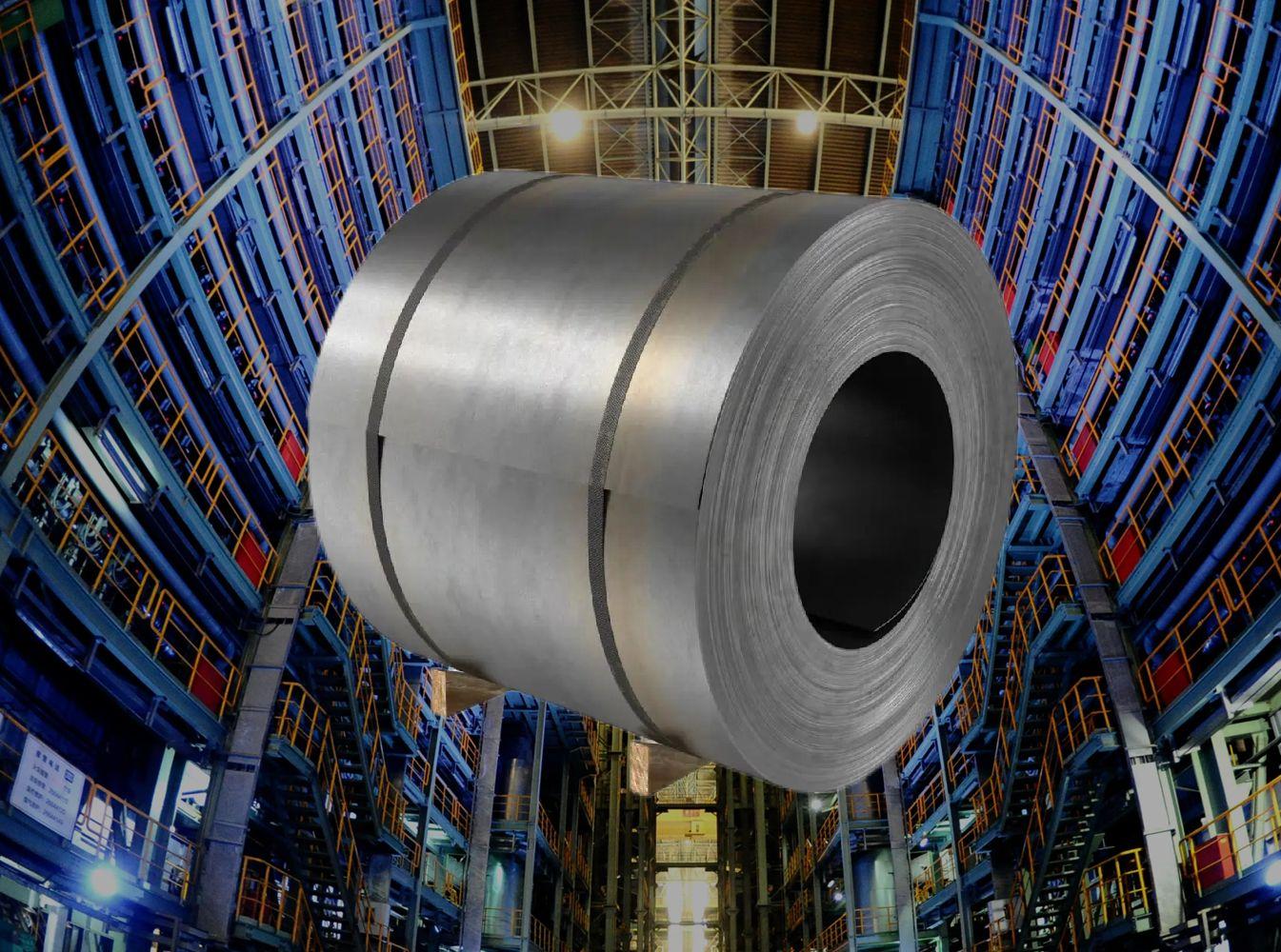
The quality of a carbon steel pipe begins long before forming or welding starts. Steel billet or hot-rolled coil quality directly determines the pipe’s final mechanical stability.
Poor raw materials may contain:
Non-metallic inclusions
Segregation defects
Surface cracks
Uneven chemical composition
These defects can reduce:
Tensile strength
Fatigue resistance
Weld reliability
Corrosion resistance
Industrial-grade pipe manufacturing therefore requires strict incoming material inspection.
Professional carbon steel pipe manufacturers typically verify:
Carbon content
Sulfur and phosphorus levels
Yield strength
Elongation performance
Surface integrity
Controlling impurity levels is especially important because excessive sulfur or phosphorus may increase brittleness and crack sensitivity under stress.
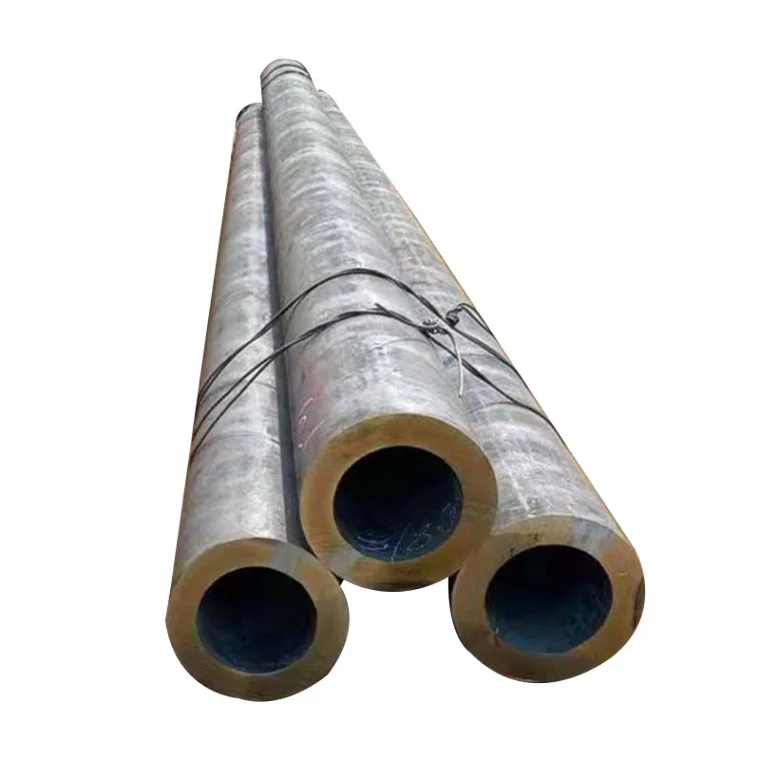
One of the most important distinctions in carbon steel pipe manufacturing is whether the pipe is seamless or welded.
Seamless pipe production starts by heating solid steel billets before piercing and rolling them into hollow tubes. Because there is no weld seam, the pipe structure remains more uniform under high-pressure conditions.
This makes seamless pipes suitable for:
High-pressure steam systems
Boiler tubing
Petroleum transportation
Refinery processing
Thermal power systems
Welded carbon steel pipe is produced by forming steel strip into cylindrical shapes followed by longitudinal or spiral welding.
Modern welding technology has significantly improved pipe quality, especially with:
High-frequency resistance welding
Submerged arc welding
Automated seam tracking systems
High-quality welded pipes are widely used in:
Construction systems
Structural engineering
Water pipelines
Fire protection systems
Medium-pressure industrial transport
The selection between seamless and welded pipes depends heavily on:
Pressure requirements
Fluid properties
Budget constraints
Operating temperature
Installation conditions
A reliable carbon steel pipe supplier should recommend manufacturing methods according to actual service environments rather than standard catalog limitations.
For welded carbon steel pipes, seam quality directly determines long-term structural reliability.
Poor welding may create:
Incomplete fusion
Porosity
Cracks
Undercutting
Residual stress concentration
These defects become potential failure points under cyclic pressure and thermal expansion conditions.
Industrial pipe manufacturers therefore implement multiple inspection procedures during welding production.
Advanced facilities commonly use:
Online ultrasonic inspection
Eddy current testing
Hydrostatic testing
X-ray examination
Weld seam monitoring systems
Automated welding equipment also improves consistency by reducing human variation during high-volume production.
A professional carbon steel pipe manufacturer understands that weld stability affects not only pressure resistance but also downstream fabrication efficiency.
Industrial carbon steel pipes often undergo heat treatment after forming or welding.
The purpose is to:
Relieve residual stress
Refine grain structure
Improve toughness
Stabilize mechanical properties
Without proper heat treatment, pipes may experience:
Distortion
Brittleness
Reduced fatigue life
Uneven hardness distribution
Normalizing treatment is widely used because it improves structural uniformity and mechanical consistency.
For high-pressure systems, carefully controlled thermal processing becomes especially important for preventing crack propagation during long-term operation.
A reliable carbon steel pipe supplier maintains strict furnace temperature control and cooling procedures throughout the heat treatment process.
Many buyers assume thicker walls automatically guarantee better pressure performance. In reality, pressure resistance depends on multiple interacting factors.
These include:
Material yield strength
Pipe diameter
Weld quality
Heat treatment condition
Wall thickness uniformity
Uneven wall thickness may create localized stress concentration under pressure loading.
Industrial manufacturers therefore use precision rolling and automated measurement systems to maintain dimensional consistency throughout production.
Hydrostatic pressure testing is commonly used to verify pipe integrity before shipment.
This testing subjects pipes to internal pressure levels above standard operating conditions to identify hidden defects before field installation.
A professional carbon steel pipe manufacturer treats pressure verification as a core quality control process rather than a final inspection formality.
Corrosion remains one of the largest causes of pipeline failure worldwide.
Even high-strength carbon steel can deteriorate rapidly without proper surface protection in:
Coastal regions
Underground installations
Chemical plants
Humid industrial environments
Industrial pipe systems therefore frequently use anti-corrosion technologies such as:
Hot-dip galvanizing
Fusion bonded epoxy coating
3-layer polyethylene systems
Internal cement lining
Bituminous coatings
Surface preparation quality strongly affects coating adhesion performance.
Before coating application, pipes typically undergo:
Shot blasting
Surface cleaning
Oxide scale removal
Roughness preparation
Poor surface preparation may cause premature coating delamination and accelerated corrosion.
Large industrial projects increasingly use prefabricated modular piping systems to reduce on-site construction time.
This approach requires high dimensional precision across every pipe section.
Inconsistent pipe dimensions may create:
Alignment errors
Welding gaps
Installation delays
Increased labor cost
Modern carbon steel pipe manufacturers therefore use automated production systems to control:
Pipe straightness
Ovality
End bevel angle
Diameter tolerance
Wall thickness deviation
Improved dimensional consistency supports faster installation and more stable field welding quality.
For energy infrastructure and industrial construction projects, material supply reliability is now a critical evaluation factor.
Delayed pipe delivery can interrupt:
Fabrication schedules
Installation timelines
Equipment commissioning
Overall project completion
Professional suppliers increasingly invest in:
Large-scale inventory systems
Export logistics coordination
Production scheduling optimization
Traceability management
Fuchuan Metal Co., Ltd. supplies industrial metal materials including stainless steel products, pipes, nickel-based alloys, aluminum, copper products, and high-temperature alloy materials for industries such as petrochemical processing, shipbuilding, environmental engineering, energy systems, and aerospace manufacturing.
Broad industrial supply experience helps support diversified engineering projects requiring stable material sourcing and technical coordination.
The performance of a carbon steel pipe depends on far more than basic material specifications. Manufacturing quality, weld integrity, heat treatment stability, dimensional precision, and corrosion protection all influence long-term operating reliability.
As industrial systems continue moving toward higher operating pressure and more complex service environments, professionally manufactured carbon steel pipes remain essential for safe and efficient infrastructure development.
Modern buyers increasingly prioritize stable production capability, inspection standards, and engineering reliability when selecting carbon steel pipe suppliers. Manufacturers capable of combining precision production, strict quality control, and diversified industrial material expertise will continue playing an important role in global industrial pipeline markets.

Start Search
Clear records
history record
Clear records
history record